
Who’s That?
The differences between our eye-catching fly-catching summer visitors…

It’s a warm afternoon in late spring, and you notice those birds are back again. You see them every summer; perhaps they soar above your town, around local farms and waterways, or are nesting under your roof. Do you want to know what they are? Perhaps you have made assumptions already, and maybe you’re right, but let’s find out for sure! After all, being able to tell your swifts from your swallows is something of a party trick.
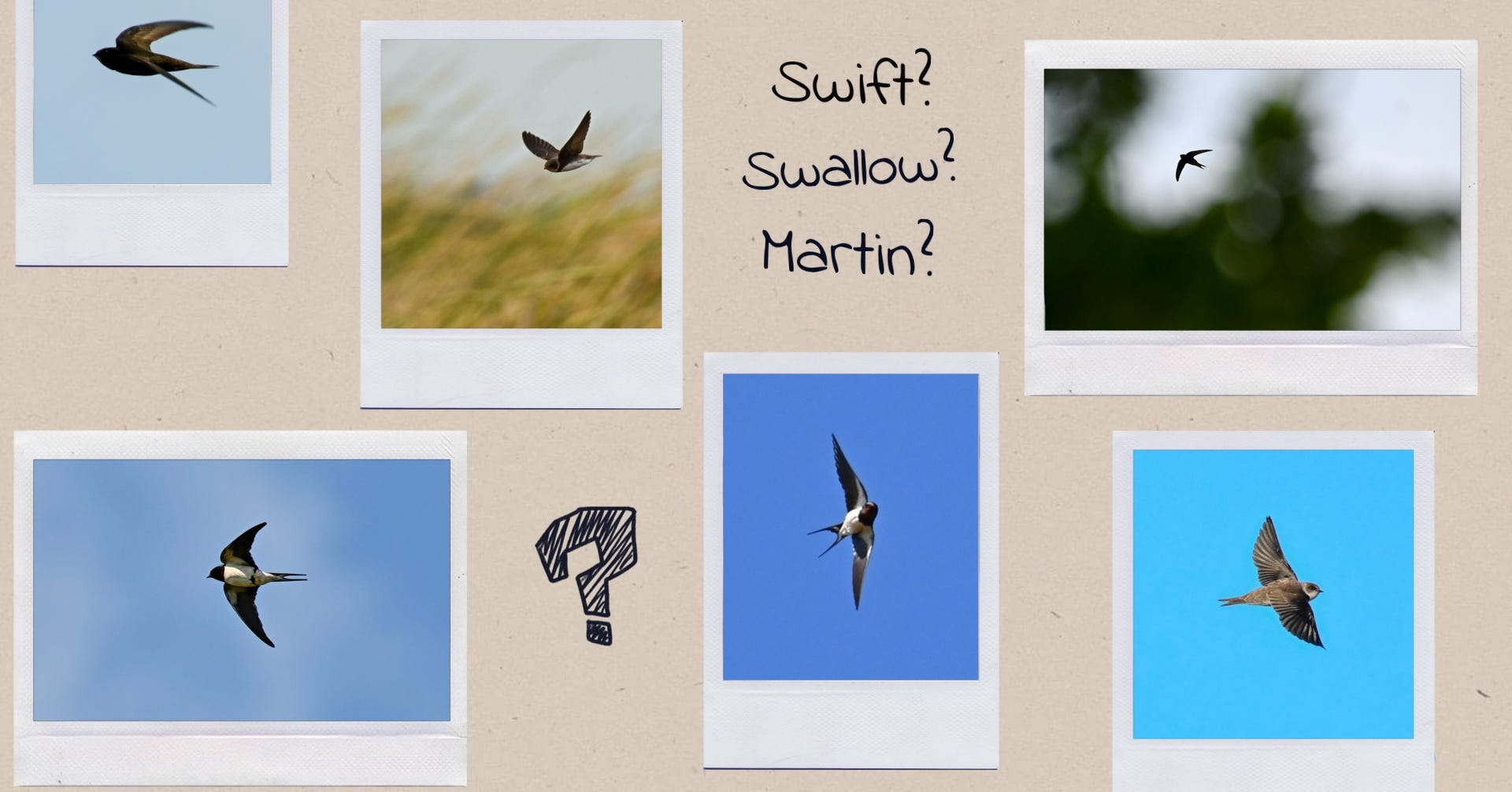
Our most noticeable and iconic summer visitors, that could be flying over your garden or living under your eaves for a few months a year, are swifts, swallows, house martins and sand martins. Telling them apart can be a challenge; I remember being astounded that my dad’s friend could identify them after just a few seconds, when all I did was point and say “swallows” to any group of birds in the summer sky. Once you learn a few tips though, it really can become second nature.
One of the easiest and most immediate ways to identify your birds is by their sound, specifically if they are swifts. If you hear their ethereal screams, there is really no mistaking them. Remembering the difference in calls between swallows and martins is a bit harder, describing it in writing is harder still. For that reason, I would recommend the Merlin Bird ID app. Its sound identification feature (as well as picture and description ID), is incredibly helpful. Being able to whip out your phone and narrow down what bird you are hearing is fantastic regardless of your experience level, and helped me a lot when I was first learning bird calls. It can’t be 100% accurate all the time, and might not hear everything you can, but for common UK birds it is a reliable tool.
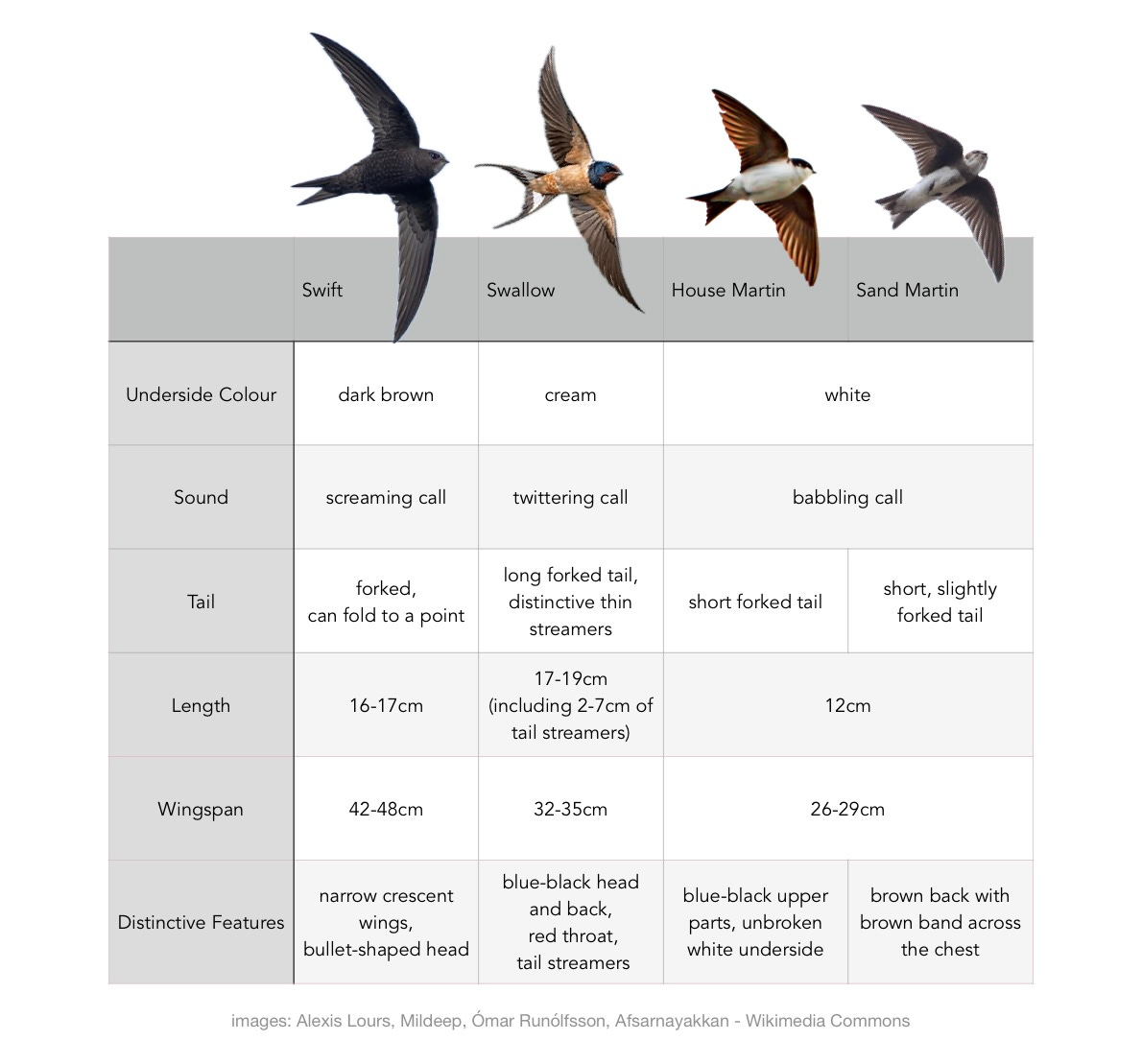
Some physical differences between these species can be immediately obvious once you know what to look for, even when they are silhouetted in the sky or darting past at high speed. Others are harder to see unless you get a closer look. Before diving into more detailed descriptions of each bird, here is a table of basic differences for those who want quick answers:
Barn Swallow
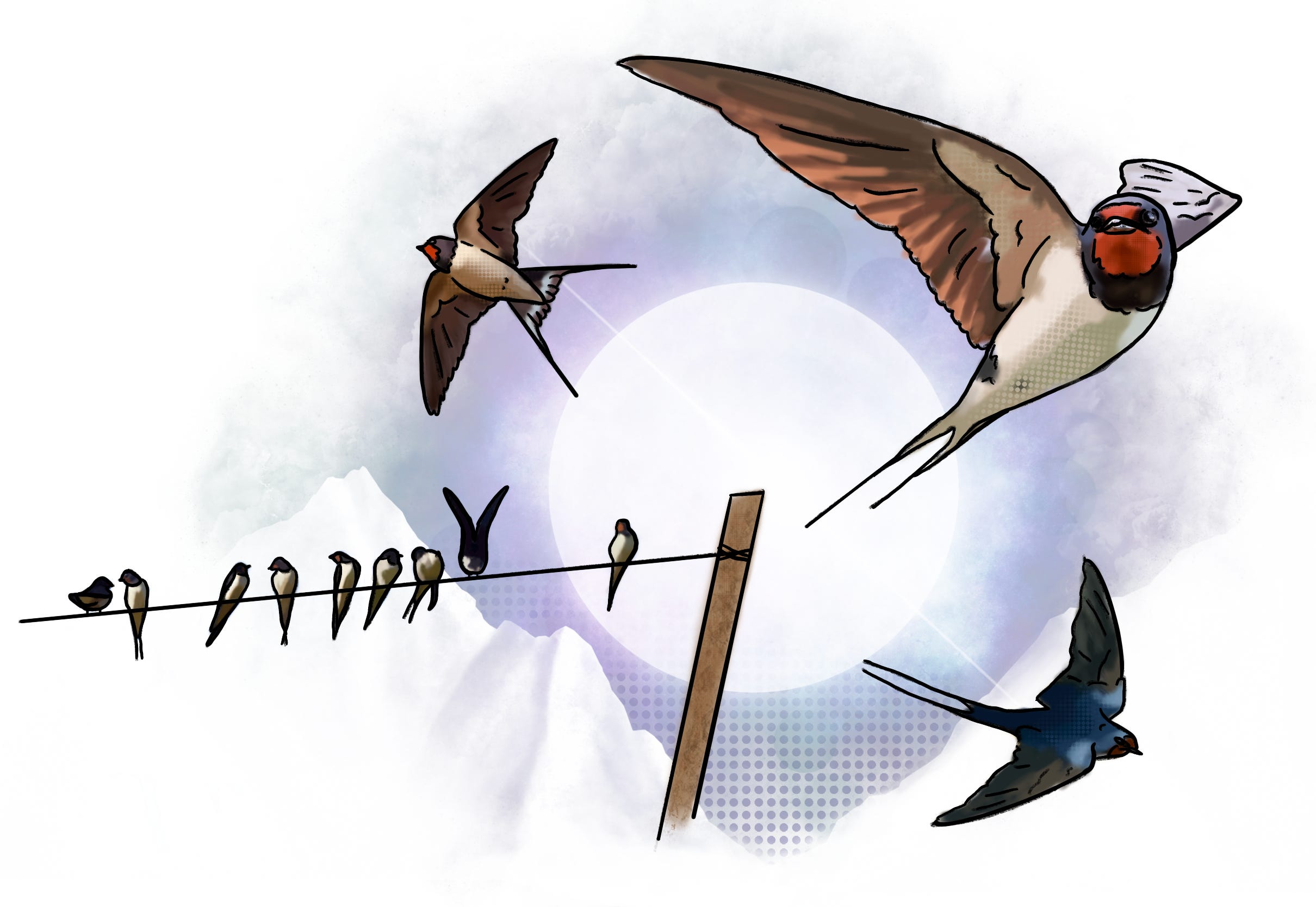
Swallows are less likely to be seen in urban environments, preferring farmland and other areas where insects are prevalent, flying acrobatically over the countryside. Their full name, the Barn Swallow, gives a clear indication where they prefer to nest, largely in outbuildings and on farms. Still, you may find them in towns or around rural homes. Their distinctive long forked tails are their key identifier. You may see swallows perched on wires, particularly as autumn draws in, and get a good look at their orange-red throat and iridescent dark-blue top side. Their slightly scratchy twittering call is often heard in open countryside and farmland. Arriving in April and returning to Africa in autumn, late September or October, they are here for the warmest half of the year.
House Martin
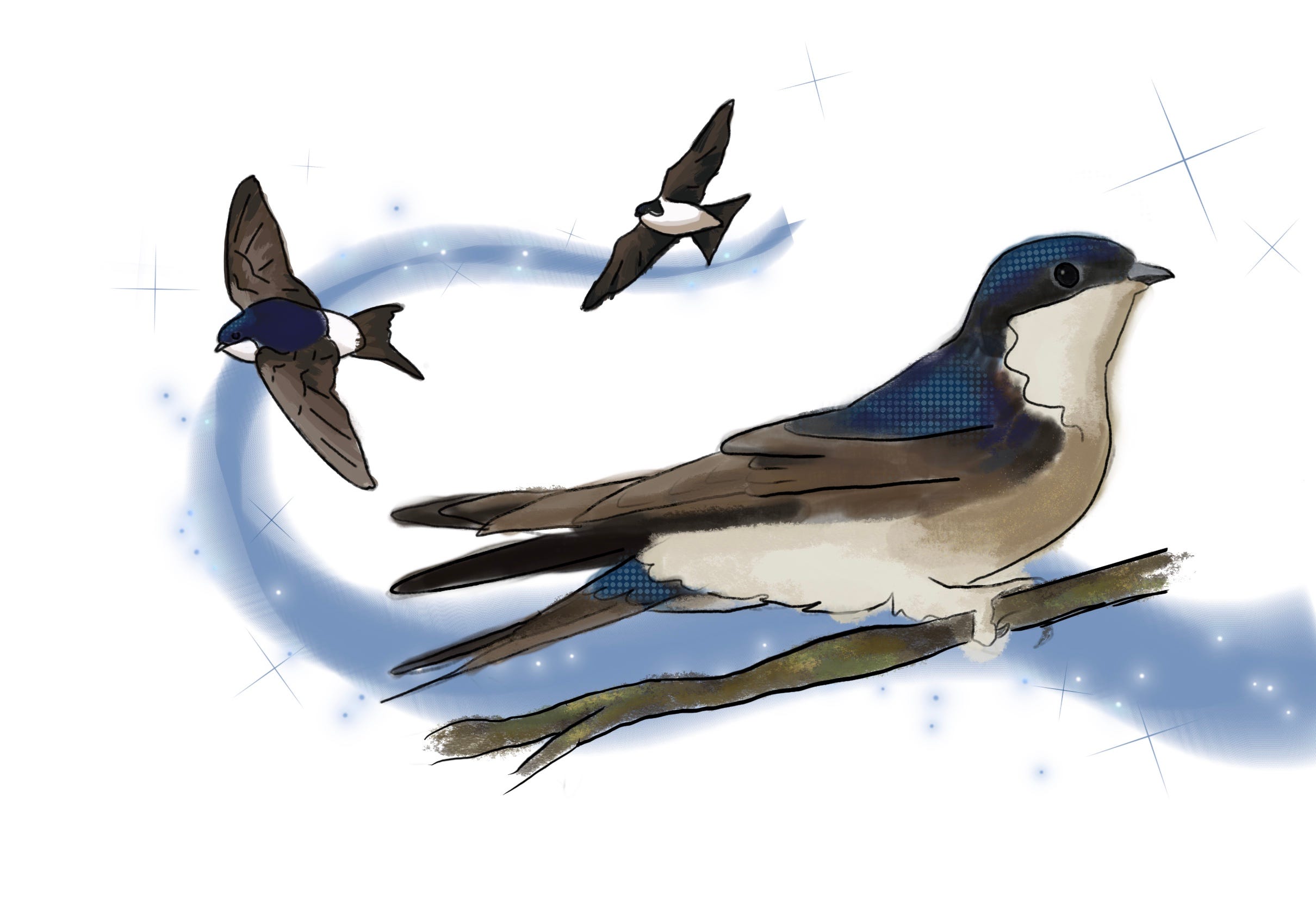
The martins are smaller than swallows and swifts, with house martins in particular appearing quite dumpy in flight. Like swallows, house martins have iridescent blue upper parts when seen in good light, but unlike the other birds discussed, have a distinctive white rump. They have a pale white underside including the throat, which you might see peeking out from their mud nests under eaves. They tend to nest in groups, meaning some buildings could hold several nests, and are happy nesting in towns as long as there is enough food nearby. In my local area, colonies of house martins settle around town train stations, nesting under old station house eaves. If you have house martins living around your home, bear in mind that they often reuse nests after a bit of repair, so avoid damaging or removing them if you can. With a similar calendar to the swallow, they stay here from April to mid autumn.
Sand Martin
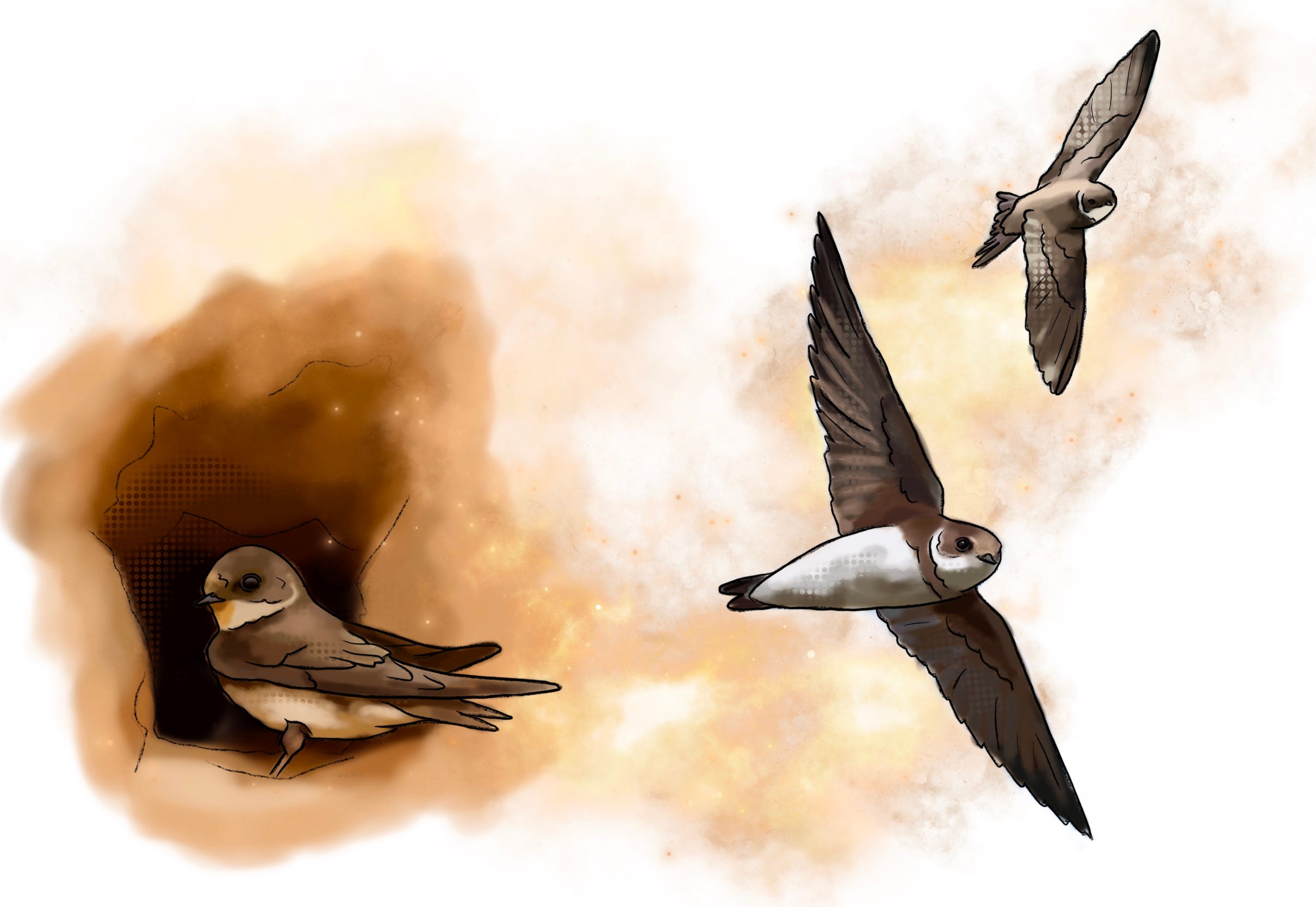
Slimmer than house martins, with narrower wings, sand martins can still be difficult to differentiate from their house-nesting cousins, especially when in the air. Both species tend to make noise consistently while flying, with the sand martin having a slightly more rattling chirp than the house martins’s chattering babble. Getting eyes on a nesting location is a clearer clue, as sand martins nest in burrows dug in riverbanks or sandy cliffs. Sometimes, like in a fairly central riverside area of my home town, sand martins use pipes or holes in walls to nest. They can breed in large colonies, sometimes numbering in the thousands along lowland river systems. When looking at their backs, sand martins are dusty brown, with none of the blue-black of the house martin or swallow, and have no white rump. They have a brown band high on their chest, which can be helpful in separating them from the unbroken white underside of a house martin when in flight. They are the first to return from Africa, settling here from March to September.
Common Swift
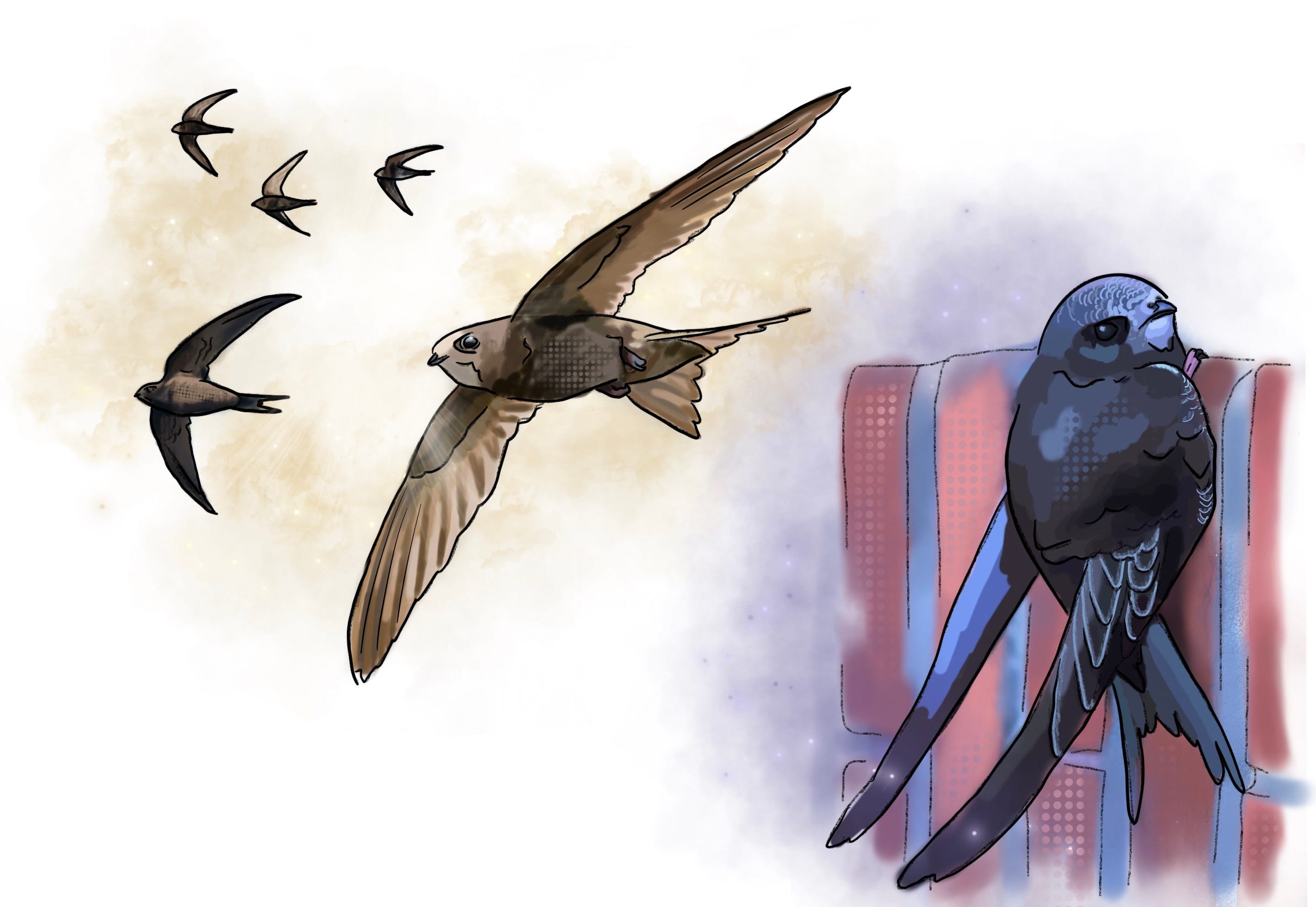
Swifts are the rulers of the sky, the fastest and largest of the four species laid out above. They have sharp, narrow crescent-shaped wings, like a boomerang against the sky, with a bullet-shaped head. They may be seen in noisy, large groups in summer evenings, called ‘screaming parties’, spiralling up into the sky. They nest in man-made structures, particularly in roofs and under eaves, and are our most fleeting house guests. Arriving from late April and May, they spend a few months rearing chicks, and then leave once again in early August. When seen close up, you may think they are a bit boring, being almost entirely greyish brown, but they are special in many ways. They are my favourite bird, and you can read about their amazing lives here.
While all the birds we have discussed look quite similar and do very similar things, swifts are so genetically distinct that they are in a separate taxonomic order - the Apodiformes, meaning ‘no feet’ in Greek. To be clear, they do have feet, but they are functionally useless. They cannot stand, walk, hop, cling or perch upright in the way most other birds can, and only really claw onto vertical surfaces when nesting. This isn’t a problem for them, as they spend their entire lives in the air, aside from when they are raising chicks. If you are seeing a bird perched on an overhead wire, it is definitely not a swift. Their closest relatives are the hummingbirds, meaning that the swifts are far from any close family in the UK. It seems as though the last common ancestor between the Apodiformes and the Passeriformes - the over half of all bird species with a toe arrangement that aids perching, including swallows and martins - could have lived upwards of 60 million years ago, almost towards the end of the reign of the dinosaurs. With tens of millions of years separating them, the odds are that swifts are more distantly related from swallows and martins than any two random birds species you can name are from each other. Their superficial similarities are a case of convergent evolution, where animals that evolve to fit similar niches will end up looking and behaving similarly.
Depending on the area, these birds may be seen flying together; I have seen three of these species at once flying over my house, and all four within my town. While you don’t have to know the names and stories of these birds to enjoy the spectacle of their visit, learning more about the animals you share your home with, and understanding their needs, can be rewarding. Why not try memorising a couple of their unique features, and give identification a go? It doesn’t matter if you’re wrong, but it’s very satisfying when you’re right!