
Swift - Nature’s Perfect Flight Machine
My favourite bird should be yours too, and here’s why…

It is nearly impossible for me to choose a favourite bird, let alone stick with that choice for long. I say nearly impossible, because every spring my excitement builds for one particular bird to return, and when it does there is no denying my favouritism.
The swift is one of the birds you might see soaring high in summer skies, superficially similar to swallows and martins. From late April to August, they grace Europe with their presence, breeding here before returning to Africa. Swifts that breed in the UK have one of the longest migrations of any bird in the world, travelling up to 7,000 miles each way, for a 14,000 mile round trip annually. In a lifetime they could fly over two million miles. For comparison, a trip to the moon is only 238,855 miles. From what we know about their migration, they traverse France and the Iberian peninsula, avoid the Sahara desert by skirting the Atlantic coast of Africa, and go east across the continent before reaching their winter homes in equatorial and Southern Africa. They show impressive navigation skills, often returning north in spring to the exact same nest and partner every year.
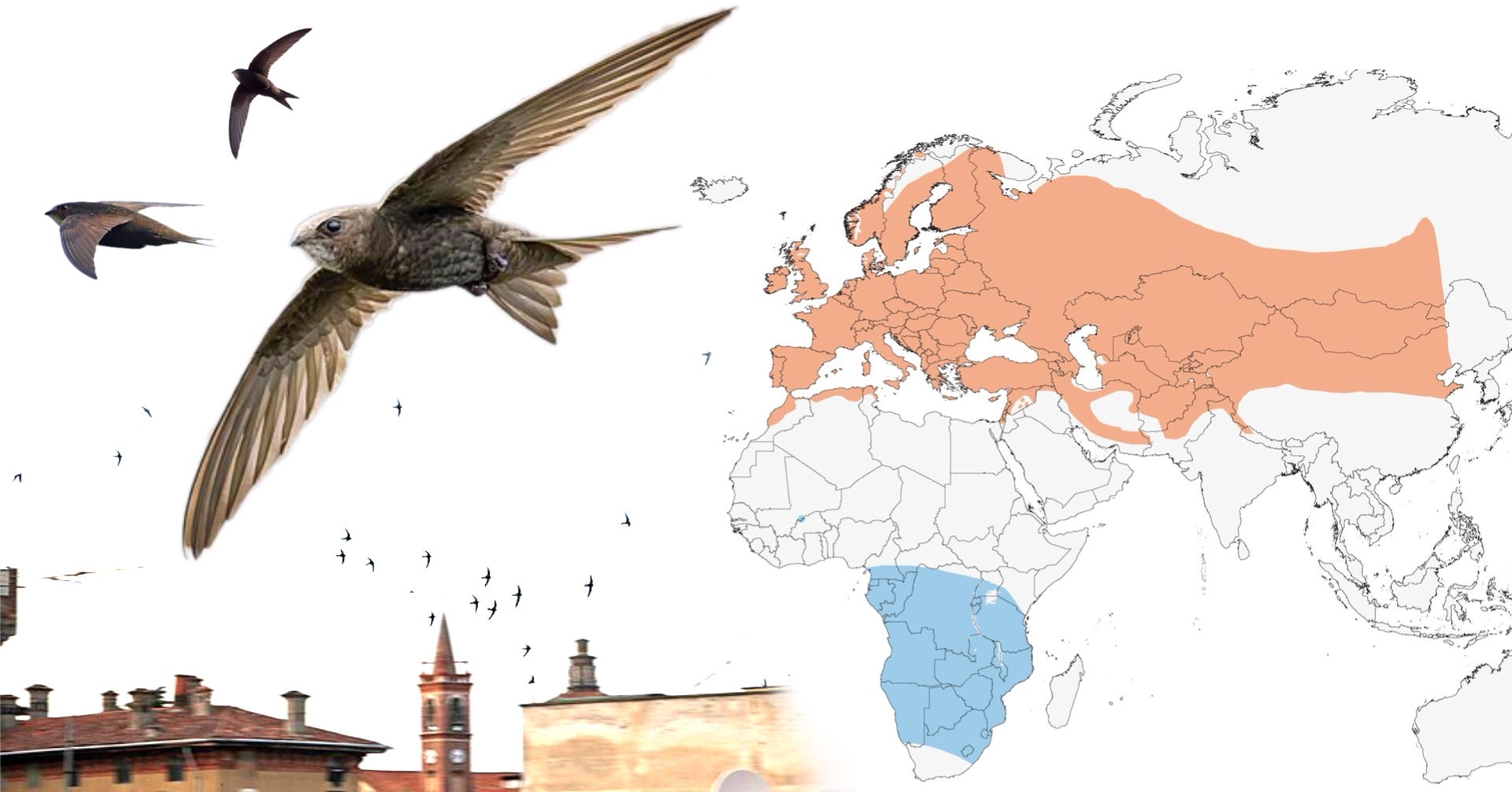
Though a mighty journey, it can be completed fairly quickly - some individuals complete their migration in less than a week (though most take a few weeks, stopping for breaks). Swifts boast the fastest top speed in level flight of any bird, with a recorded top speed of 69mph. They are built for fast and extended flight. Weighing about as much as a creme egg with a wingspan of around 40cm, they are relatively light for their size. Their shape is clearly aerodynamic, with sharp sickle-shaped wings that aid speed, manoeuvrability and gliding. To me, swifts have almost prehistoric-looking facial features. In fact, they are ancient birds, appearing to have changed very little since they evolved 40 million years ago.
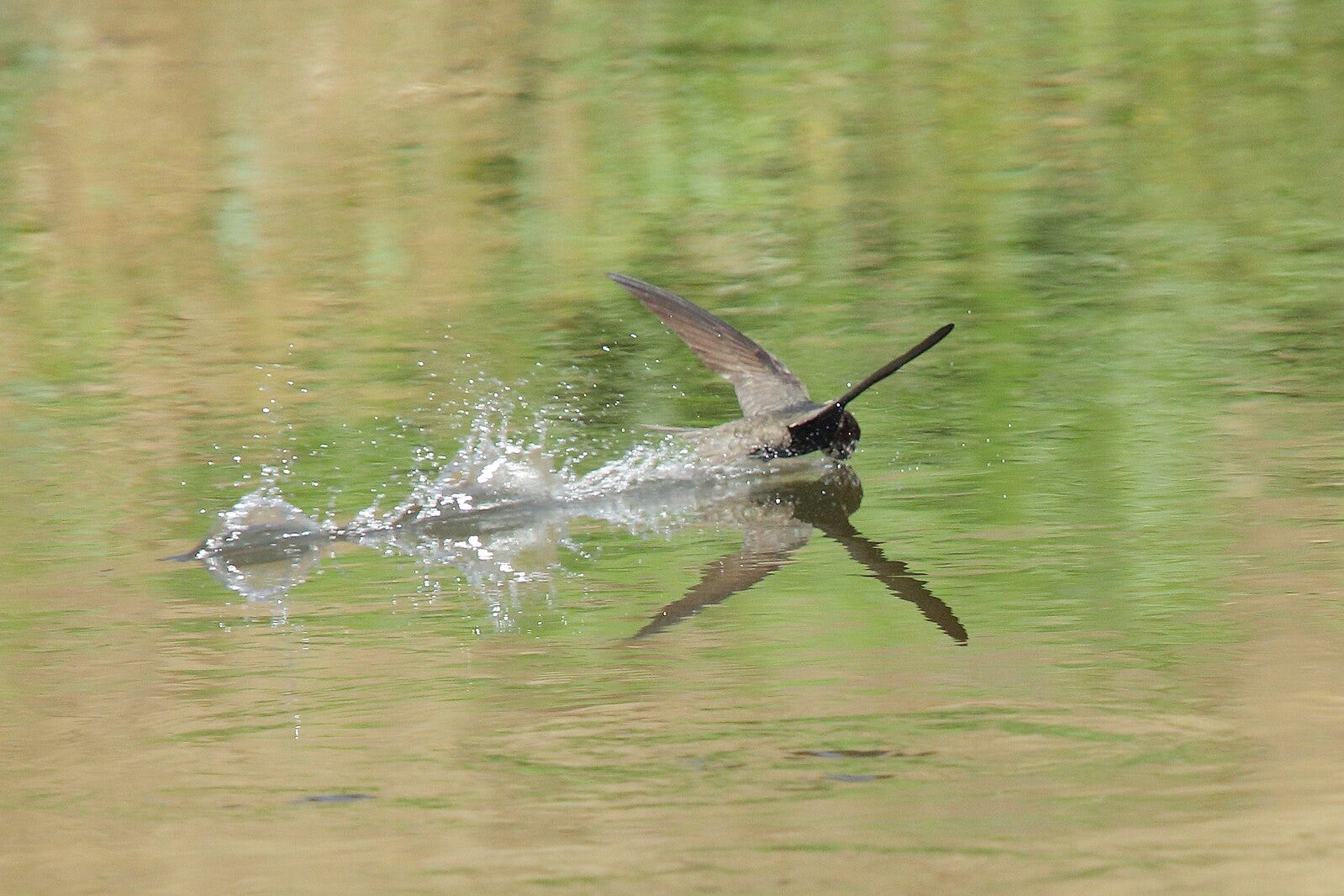
Where swifts go from impressive to downright unbelievable is the longevity of their flight. Some individuals go ten months without landing. They simply have no need to - they can eat, drink, sleep and mate on the wing. They drink and bathe by skimming over water or flying slowly through rain, and can catch 10-100,000 insects per day. But how do they sleep in the air? We think that, like dolphins, they engage in unihemispheric sleep; half of their brain sleeps whilst the other stays active. This allows them to navigate and avoid danger while resting.
The sound of a ‘screaming party’ of swifts may be my favourite noise in the world (a strange choice, I admit). During summer evenings, large groups of swifts often gather near a nesting area, dashing across the sky and calling loudly. We are unsure exactly why they do this; it is perhaps a form of socialisation or information exchange, but it is more likely the non-breeding birds gathering together to ascend into the dusk sky to sleep. These groups spiral up to an astounding altitude, with radar studies showing they reach from 6000 to almost 10,000 feet (2 to 3km). At this height, swifts can cruise warm air masses, like gliders and other ultralight aircraft. There are no obstacles to avoid and no predators to be concerned about, making it an unusual but safe place to ‘snooze’.
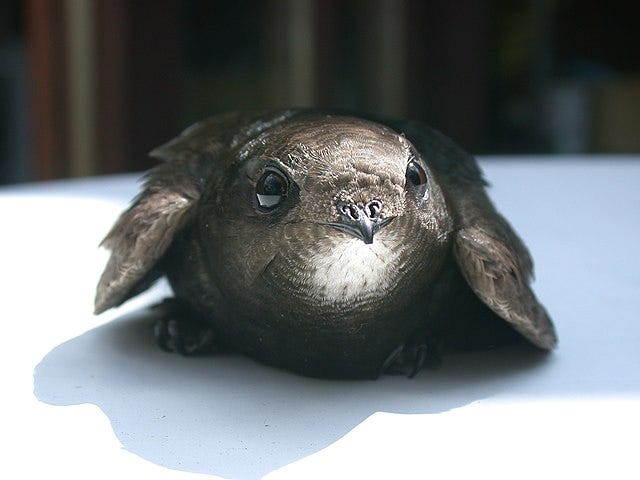
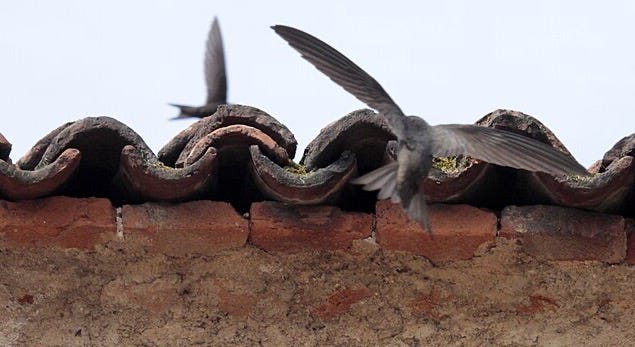
In 2021, the swift was added to the UK Birds of Conservation Concern ‘red list’, meaning they are at serious risk and require focused conservation efforts. Since 1995, the population of swifts has declined by over 65%, at a rate which is not slowing. Loss of food sources and suitable breeding locations seem to be important factors in this decline, with poor weather also being associated with nest failures. Historically swifts may have used cliffs and holes in trees to nest, but the loss of habitat like the ancient Caledonian Forest has resulted in swifts using man-made structures. They like to nest in roofs using hollows in old structures, or under tiles and eaves, but as old buildings are refurbished, their preferred nesting sites are disappearing. By putting up suitable nest boxes or adding hollow ‘swift bricks’ to new-build homes, we can try to replace the urban nesting sites being lost. Plans to make swift bricks mandatory in new housing developments have been stalled due to changes in the Labour government’s Planning and Infrastructure Bill, so for now this action is mostly up to us concerned citizens. Insect population decline is a more complex issue, with climate change likely playing a significant role. Having an insect-friendly garden may help your local birds, many of which rely on insects as a food source.
These birds are wonders of evolution, truly unique in our skies. When summer next unfolds, why not keep an eye out for their crescent-winged silhouettes, and keep an ear open for their ethereal screams. Enjoy the show while it lasts, as these rulers of the sky set off on their long journey south once again in August. I hope that their fleeting visits never cease for good; a dynasty lasting tens of millions of years should not come to an end in one human lifetime. With effort, we can prevent such an outcome. Warm summer evenings simply wouldn’t be the same without them.
*** If you are wondering what the differences are between swifts and swallows (and other soaring summertime visitors), I am here to help! Stay tuned for my guide to identifying swifts, along with some fun facts about their evolution. ***